
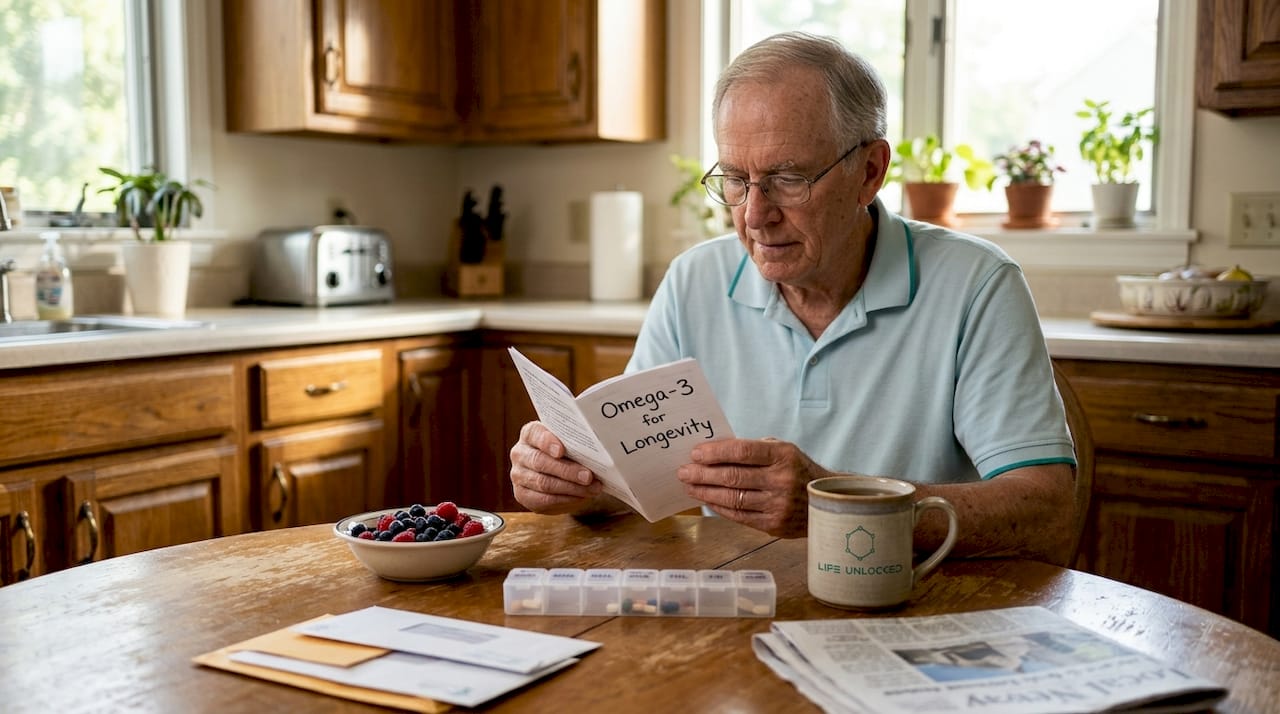
Omega-3-Fettsäuren genießen seit Langem den Ruf, gut für die Herzgesundheit zu sein – und dieser Ruf ist wohlverdient. Aber wenn Sie denken, das sei die ganze Geschichte, hält die jüngste Wissenschaft etwas Überraschendes bereit. Für aktive Senioren in Europa, die ihrer Vitalität tatsächlich messbare Jahre hinzufügen möchten, bewegt sich die Omega-3-Forschung schnell in Gebiete, die das biologische Altern, die Gehirnfunktion, den Muskeltonus und sogar Ihre DNA abdecken. Hier erfahren Sie, was die Beweise tatsächlich zeigen, wer am meisten davon profitieren kann und wie Omega-3 als Teil einer intelligenteren Langlebigkeitsstrategie zu betrachten ist.
Wichtigste Erkenntnisse
| Punkt | Details |
|---|---|
| Kleine, aber echte Effekte | Omega-3s können das Altern auf biologischer Ebene leicht verlangsamen, besonders bei Senioren mit geringer Ausgangsaufnahme. |
| Personalisierung zählt | Die Vorteile einer Omega-3-Supplementierung variieren je nach Ernährung, Genetik und individuellem Gesundheitszustand. |
| Sicherheit und Nutzen abwägen | Hohe Dosen erhöhen bestimmte Risiken; eine moderate, individualisierte Anwendung ist am sichersten und effektivsten. |
| Gesamter Lebensstil zuerst | Omega-3 wirkt am besten in Kombination mit allgemeinen gesunden Gewohnheiten wie Ernährung und Bewegung. |
Was bewirkt Omega-3 eigentlich bei älteren Erwachsenen?
Nachdem wir die gängige Ansicht behandelt haben, wollen wir nun aufdecken, was Omega-3-Fettsäuren laut aktueller Wissenschaft für Senioren leisten können und was nicht.
Omega-3-Fettsäuren sind mehrfach ungesättigte Fettsäuren, hauptsächlich EPA und DHA, die der Körper nicht in nennenswerten Mengen selbst herstellen kann. Man nimmt sie über fettreichen Fisch, bestimmte Samen und Nahrungsergänzungsmittel auf. Bei älteren Erwachsenen interagieren sie gleichzeitig mit mehreren biologischen Systemen, weshalb Forscher sie so interessant finden.
Wie die Forschung zu Omega-3 bei Senioren bestätigt, werden Omega-3-Fettsäuren bei Personen über 65 Jahren als potenzielle Nährstoffe untersucht, die alterungsbedingte Bereiche wie den Ernährungszustand, die Kognition, die Knochengesundheit, den Muskeltonus und die allgemeine Gesundheit beeinflussen können. Das ist ein breites Spektrum potenzieller Wirkungen.
Hier ist eine Momentaufnahme dessen, was die Beweise derzeit stützen:
| Bereich | Beweiskraft | Anmerkungen |
|---|---|---|
| Herz-Kreislauf-Gesundheit | Mittel bis stark | Etabliert, aber dosisabhängig |
| Entzündung (Inflammaging) | Mittel | Besonders relevant für die Alternsbiologie |
| Muskelerhaltung | Neu aufkommend | Besonders bei Widerstandstraining |
| Kognitive Funktion | Gemischt | Kleine Effekte, laufende Forschung |
| Knochendichte | Begrenzt | Weitere Studien erforderlich |
Ein wichtiges Konzept ist „Inflammaging“, die chronische, niedriggradige Entzündung, die bei den meisten Menschen über 60 das Altern still und heimlich beschleunigt. Omega-3-Fettsäuren helfen, die Entzündungsbiologie des Körpers zu verändern, nicht indem sie sie vollständig unterdrücken, sondern indem sie die Auflösung entzündlicher Signale fördern. Dieser Mechanismus ist entscheidend dafür, warum Omega-3-Fettsäuren immer wieder in der Langlebigkeitsforschung auftauchen.

Die Beweise für die Langlebigkeit durch Omega-3 zeigen durchweg bescheidene, aber echte biologische Effekte. Die Effektstärken in aktuellen DNA-Methylierungsstudien (biologische Altersmarker) sind in der Regel gering. Dennoch können kleine Veränderungen, die sich über Jahre summieren, von Bedeutung sein. Und für bestimmte Untergruppen sind die Statistiken überzeugender.
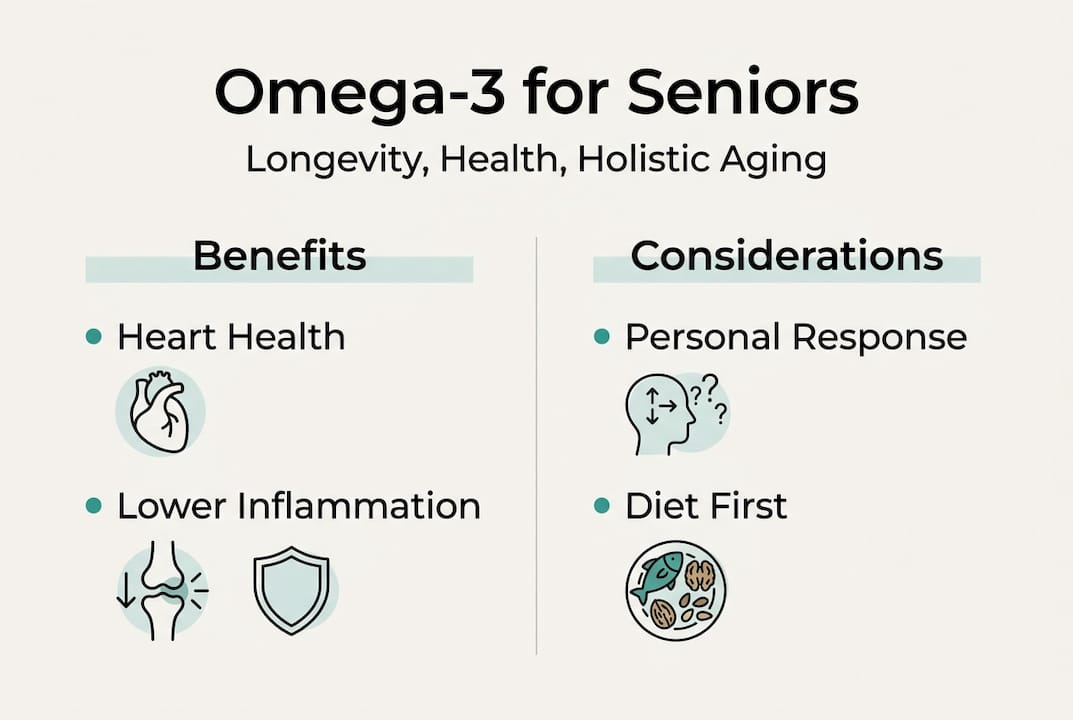
Die Wissenschaft: Alterungshemmung vs. Lifestyle-Vorteile
Um zu verstehen, worauf Omega-3 potenziell abzielt, ist es entscheidend, supplementspezifische Ergebnisse von umfassenderen Strategien für gesundes Altern zu unterscheiden.
Die wichtigsten aktuellen Daten stammen aus der DO-HEALTH-Studie, einer großen randomisierten europäischen Studie. Sie zeigte, dass die Einnahme von 1 g/Tag Omega-3 eine kleine, aber messbare Verlangsamung der biologischen Alterungsmarker bewirkte, mit zusätzlichen Effekten in Kombination mit Vitamin D und Bewegung. „Biologische Alterungsmarker“ beziehen sich hier auf DNA-Methylierungsuhren, die messen, wie schnell Ihre Zellen auf molekularer Ebene altern.
Hier ein Vergleich verschiedener Ansätze:
| Intervention | Biologischer Alterungseffekt |
|---|---|
| Omega-3 allein (1 g/Tag) | Kleine messbare Verlangsamung |
| Omega-3 + Vitamin D | Größerer Effekt als bei beiden allein |
| Omega-3 + Vitamin D + Bewegung | Stärkstes kombiniertes Ergebnis |
| Keine Intervention | Standard-Alterungsverlauf |
Dies ist ein entscheidender Punkt. Das Nahrungsergänzungsmittel allein bewirkte nur eine geringe Veränderung. Fügt man Anti-Aging-Ernährungsgewohnheiten und konsequente Bewegung hinzu, wird der Effekt bedeutsamer. Die Ergebnisse der DO-HEALTH-Studie legen nahe, dass Omega-3 am besten als Teil eines Systems funktioniert, nicht als eigenständige Lösung.
Die wichtigsten Erkenntnisse aus dieser Studie:
- Omega-3 bewirkt kleine, reale Veränderungen in den biologischen Alterungs-Uhren.
- Der Effekt ist additiv mit Vitamin D und Bewegung.
- Eine Reduktion der Inflammaging-Marker wurde bei alternden Erwachsenen beobachtet.
- Kein einzelnes Nahrungsergänzungsmittel ersetzt einen ganzheitlichen Lebensstilansatz.
- Die Effektstärken sind inkrementell, nicht dramatisch.
Erforscher von Gewohnheiten für eine lange Lebensdauer kennen diesen Rhythmus bereits: Einzelne Nährstoffe wirken selten Wunder, aber die richtige Kombination verschiebt stetig die Waage.
Wer profitiert tatsächlich? Personalisierung, Fischkonsum und Ausgangsunterschiede
Nachdem wir die allgemeinen Effekte festgestellt haben, ist der nächste Schlüsselfaktor, wer am meisten zu gewinnen hat und warum einige mehr als andere reagieren.
Nicht jeder Senior reagiert gleich auf Omega-3-Nahrungsergänzung. Hier wird die Personalisierung entscheidend, und allgemeine Empfehlungen reichen oft nicht aus.
Die VITAL-Studie bietet eine der klarsten Einblicke in diese Frage. Größere Biomarker-Verschiebungen wurden bei Personen mit geringer Ausgangsaufnahme von Fisch beobachtet, insbesondere weil Omega-3 die Entzündungs-Auflösungsbiologie einschließlich pro-auflösender Lipidmediatoren beeinflusst. Einfach ausgedrückt: Wenn Sie bereits dreimal pro Woche Lachs essen, bewirkt die Einnahme eines Nahrungsergänzungsmittels möglicherweise nur sehr wenig für Sie.
Faktoren, die Ihre persönliche Reaktion am stärksten beeinflussen:
- Ausgangs-Omega-3-Status: Niedrige Werte bedeuten ein höheres Potenzial für Nutzen
- Ernährungsmuster: Regelmäßiger Verzehr von fettem Fisch reduziert den Bedarf an Nahrungsergänzungsmitteln
- Genetik: Einige Menschen verstoffwechseln Fettsäuren aufgrund von Genvarianten anders
- Bestehende Gesundheitszustände: Entzündliche Erkrankungen können die Omega-3-Wirkung verstärken
- Körperliche Aktivität: Bewegung verstärkt die Muskel- und Alterungsvorteile von Omega-3
Profi-Tipp: Bevor Sie mit einer Omega-3-Ergänzung beginnen, sollten Sie Ihre Ausgangswerte testen lassen. Ein Omega-3-DNA-Test kann zeigen, wie Ihre Genetik den Omega-3-Stoffwechsel beeinflusst, und Ihnen helfen zu entscheiden, ob Sie tatsächlich eine Ergänzung benötigen und in welcher Dosis.
Der Einheitsansatz übersieht viel zu viele individuelle Variablen. Ernährung, Aktivität, Genetik und Krankengeschichte prägen alle Ihre Reaktion. Erst testen, dann ergänzen ist ein klügerer Weg.
Sicherheit, Nebenwirkungen und das Argument für Mäßigung
Es ist genauso wichtig, Sicherheit und potenzielle Risiken zu berücksichtigen, insbesondere für Senioren, die komplexe Gesundheitsprofile verwalten, wenn man versteht, wer am meisten profitiert.
Omega-3-Nahrungsergänzungsmittel sind im Allgemeinen gut verträglich, aber „im Allgemeinen sicher“ bedeutet nicht risikofrei, insbesondere bei höheren Dosen.
Die größte Sorge für ältere Erwachsene: Das Risiko für Vorhofflimmern steigt mit höher dosierten Omega-3-Regimen, insbesondere bei Personen, die bereits ein erhöhtes Herz-Kreislauf-Risiko haben. Dies ist kein Grund, Omega-3 zu meiden, aber ein Grund, präzise bei Dosierung und Kontext zu sein.
Praktische Schritte für eine sichere Omega-3-Anwendung:
- Beginnen Sie mit 1 g/Tag, der in Alterungsstudien am häufigsten untersuchten Dosis.
- Konsultieren Sie Ihren Arzt, wenn Sie eine Herz-Kreislauf-Vorgeschichte haben oder Blutverdünner einnehmen.
- Achten Sie auf kleinere Nebenwirkungen wie Verdauungsbeschwerden oder fischigen Nachgeschmack.
- Vermeiden Sie es, Nahrungsergänzungsmittel als „je mehr, desto besser“ zu betrachten.
- Überprüfen Sie Ihren Plan alle sechs Monate basierend auf Ernährungsänderungen und Gesundheitszustand.
Profi-Tipp: Wenn Sie einem ganzheitlichen Leitfaden für ein gesundes Altern folgen, behandeln Sie Omega-3 wie eine Speiche in einem Rad, nicht wie das ganze Rad. Die Kombination mit Bewegung, Schlaf und hochwertiger Ernährung führt fast immer zu besseren Ergebnissen als eine hochdosierte Supplementierung allein.
Die NIH-Richtlinien zur Omega-3-Sicherheit bestätigen dies: Das Risiko-Nutzen-Verhältnis hängt von der Person und der Dosis ab. Mäßigung und Personalisierung sind Ihre sicherste Strategie.
Eine ganzheitliche Betrachtung: Warum Omega-3 kein Allheilmittel ist – aber dennoch eine Rolle spielen kann
Verdient Omega-3 seinen Ruf im Bereich der Seniorengesundheit, oder ist es nur ein Teil eines viel größeren Langlebigkeits-Puzzles? Ehrlich gesagt, beides.
Die klinischen Ergebnisse einer Omega-3-Supplementierung sind inkrementell, nicht transformativ. Die Wissenschaft ist real, aber die Effektstärken erinnern uns daran, dass keine Kapsel einen ganzheitlichen Lebensstil ersetzen kann. Was Omega-3 gut macht, ist, ein bereits funktionierendes System zu ergänzen: eine vollwertige Ernährung, regelmäßige Bewegung, qualitativ hochwertiger Schlaf und Stressbewältigung. Auf diesen Grundlagen aufbauend leistet es einen messbaren, wenn auch bescheidenen Beitrag.
Personalisierung ist hier alles. Erkenntnisse von Langlebigkeitsexperten weisen durchweg auf ein „Ernährung zuerst, Supplementierung bei Bedarf“-Modell als Goldstandard für die meisten Senioren hin. Testen Sie Ihre Ausgangswerte, verstehen Sie Ihre Genetik und entscheiden Sie dann. Das ist eine weitaus intelligentere Nutzung Ihrer Energie, als einem Supplement-Trend nachzujagen.
Bereit, Ihren Langlebigkeitsplan zu personalisieren?
Wenn Ihnen dieser Artikel etwas gezeigt hat, dann, dass intelligentere Nahrungsergänzung damit beginnt, Ihren Ausgangspunkt zu kennen.

Bei LifeUnlocked machen wir diesen Schritt einfach. Unser Omega-3-DNA-Test zeigt, wie Ihre Genetik den Omega-3-Stoffwechsel beeinflusst, damit Sie gezielt und nicht blind ergänzen. Bereit, noch weiter zu gehen? Unsere Langlebigkeits-Kits kombinieren DNA-Erkenntnisse, Blutmarker und personalisierte Ernährungsberatung an einem Ort und geben Ihnen ein vollständiges Bild Ihrer Alterungsbiologie und die Werkzeuge, um etwas dagegen zu tun.
Häufig gestellte Fragen
Hilft Omega-3 bei kognitivem Rückgang bei Senioren?
Omega-3-Fettsäuren werden für die Gehirnfunktion untersucht, aber die Beweise für die Kognition bei älteren Erwachsenen sind begrenzt und gemischt, daher sollten sie nicht als primäre Strategie zur Verhinderung kognitiven Rückgangs herangezogen werden.
Was ist die sicherste tägliche Omega-3-Dosis für Senioren?
Die meisten Alterungsstudien verwenden 1 Gramm pro Tag, und höhere Dosen können das Risiko für Vorhofflimmern erhöhen. Konsultieren Sie daher immer Ihren Arzt, bevor Sie diese Menge überschreiten.
Kann man genügend Omega-3 aus der Nahrung statt aus Nahrungsergänzungsmitteln beziehen?
Für viele Menschen, ja. Wer regelmäßig fettreichen Fisch isst, benötigt möglicherweise keine Nahrungsergänzungsmittel, während bei geringem Fischkonsum die Nahrungsergänzung die größten messbaren Effekte zeigt.
Sollten alle Senioren Omega-3 für Langlebigkeit einnehmen?
Nicht unbedingt. Der ernährungsphysiologische Ausgangszustand beeinflusst stark, wer reagiert, was personalisierte Tests zu einem intelligenteren Ausgangspunkt macht als eine universelle Supplementierung.
Gibt es Nachteile bei Omega-3-Nahrungsergänzungsmitteln?
Bei höheren Dosen ist das Risiko für Vorhofflimmern ein dokumentiertes Problem, insbesondere bei Senioren mit bestehenden Herzerkrankungen, weshalb individualisierte Pläne und medizinische Beratung wichtig sind.
Empfohlen
- Omega-3-Ergänzungen: 5 Jahre längere Lebensdauer – LifeUnlocked
- Das Streben nach Langlebigkeit: Eine tiefgehende Untersuchung der Anti-Aging-Obsession – LifeUnlocked
- Würdevoll altern: Ein umfassender Leitfaden für eine optimale Gesundheitsspanne – LifeUnlocked
- Wichtige Erkenntnisse zur Langlebigkeit: Die Einsichten von Langlebigkeitsexperten – LifeUnlocked
- Irisches Moos erklärt: Vorteile und Risiken für Frauen über 40 – Caribella
Aktie:
Die besten Langlebigkeits-Biomarker: Ein evidenzbasierter Leitfaden für ein gesünderes Leben
Die besten Tipps zur Nahrungsergänzungsmittelsicherheit für klügere Gesundheitsentscheidungen