
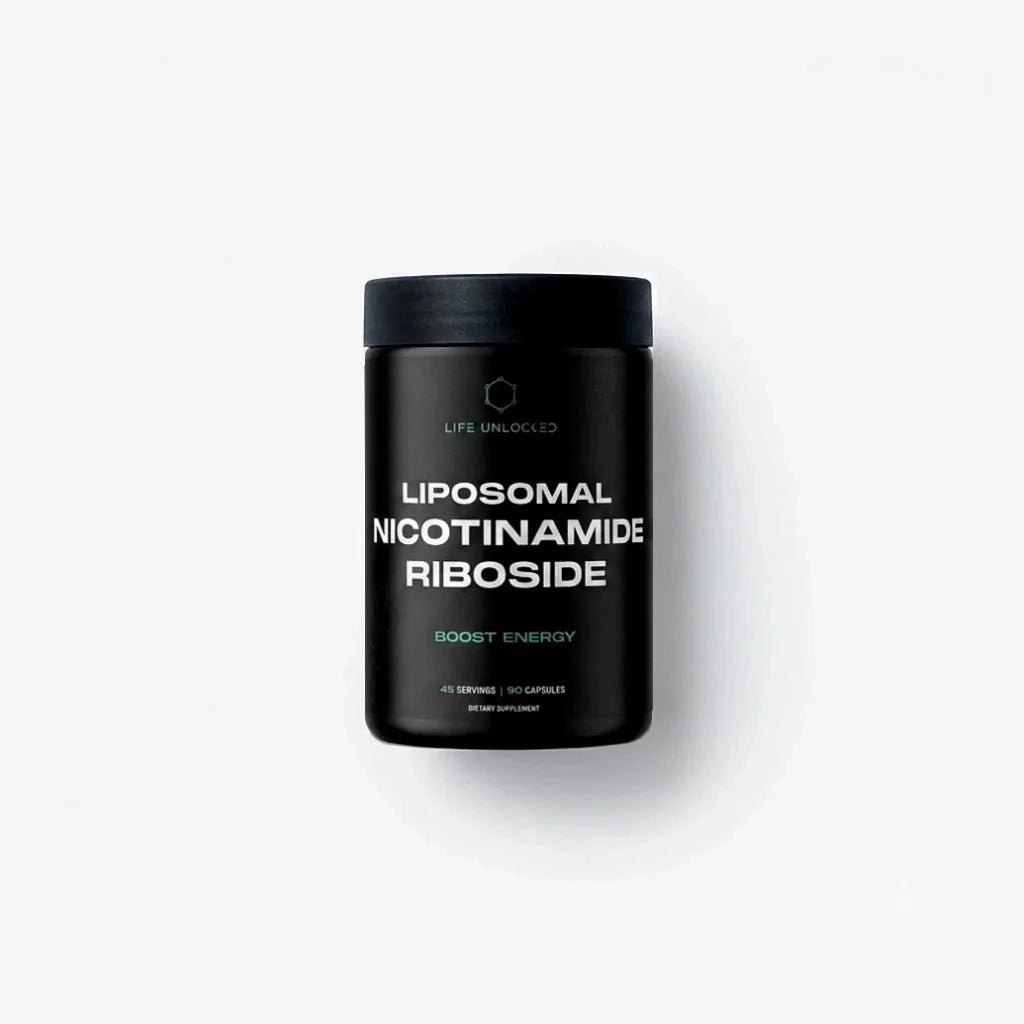
Nicotinamide riboside (NR) is a form of niacin, a B vitamin. In the EU, NR chloride is authorised as a novel food by Commission Implementing Regulation (EU) 2020/16, for food supplements at up to 300 mg a day for adults, or 230 mg a day for pregnant and breastfeeding women. Trials consistently show that NR raises NAD+ in the blood. A 2023 review of 25 published human studies found few clinically relevant effects.
This guide explains what the EU authorisation covers, what the trials measured, and why a rise in NAD+ is not the same as a health benefit.
Key points
- NR chloride has been authorised in the EU since 2020 as a novel food for food supplements, as a source of niacin
- EU maximum: 300 mg a day for adults, 230 mg a day in pregnancy and breastfeeding
- In an 8-week trial, whole-blood NAD+ rose by 22%, 51% and 142% at 100, 300 and 1,000 mg a day
- A 2023 review of 25 human studies found few clinically relevant effects
- Authorisation is a safety assessment, not evidence of benefit, and not a health claim
- NMN is not authorised in the EU
What "authorised in the EU" means
NR chloride was added to the EU list of authorised novel foods by Commission Implementing Regulation (EU) 2020/16 of 10 January 2020. The authorisation covers food supplements at up to 300 mg a day for the general adult population and 230 mg a day for pregnant and breastfeeding women, and the label must name the ingredient as nicotinamide riboside chloride. It followed an EFSA opinion that NR chloride is safe at those levels as a source of niacin.
Authorisation is a safety decision. It does not show that NR does anything for health, and it is not a health claim.
Doses above 300 mg a day, which several trials below used, are outside the authorised conditions for a food supplement in the EU.
NAD+ goes up
NAD+ is a coenzyme involved in energy metabolism and in enzymes that respond to DNA damage. NR is a precursor of NAD+.
In a 2019 randomised, double-blind, placebo-controlled trial in overweight but otherwise healthy adults, 100, 300 and 1,000 mg of NR a day raised whole-blood NAD+ by 22%, 51% and 142% within two weeks, and the increases lasted for the rest of the 8-week study. There were no differences in adverse events between NR and placebo. Two of its three authors were affiliated with ChromaDex, the company that applied for the EU authorisation.
A 2018 randomised crossover trial in healthy middle-aged and older adults found that 6 weeks of NR was well tolerated and raised NAD+ metabolism.
Then what?
A 2023 review of the 25 published human studies of NR concluded that oral NR has shown few clinically relevant effects, and that the literature tends to exaggerate the importance and robustness of reported effects.
A 2025 randomised trial in 58 adults with long COVID shows the gap. At 2,000 mg a day, NAD+ rose 2.6- to 3.1-fold within 5 to 10 weeks, but cognition, fatigue, sleep, anxiety and depression did not differ from placebo. That trial used 2,000 mg a day, far above the EU limit of 300 mg, and was part-funded by Niagen Bioscience.
Both findings can be true at once: NR reliably raises NAD+, and that has not yet translated into a measurable benefit in the trials so far.
NR, NMN and NAD+
NR and NMN are both NAD+ precursors, but their EU status differs. As of October 2026, NMN is not on the EU list of authorised novel foods. EFSA published a positive safety opinion on one NMN application in May 2026, for up to 300 mg a day, but an EFSA opinion is not an authorisation. In 2026 the Commission also closed a separate NMN application without adding NMN to the list.
How to read an NR label
| What to check | What to look for |
|---|---|
| Form | Nicotinamide riboside chloride, the authorised form |
| Dose | No more than 300 mg a day for adults, or 230 mg in pregnancy and breastfeeding |
| Ingredient list | Each ingredient with its own amount, not a "proprietary blend" |
| Claims | Anti-ageing or longevity promises are a red flag; the authorisation is not a health claim |
Frequently asked questions
Is NR legal in the EU?
Yes. NR chloride is authorised as a novel food for food supplements, at up to 300 mg a day for adults and 230 mg a day in pregnancy and breastfeeding.
How much do trials use?
Trials have used from 100 to 2,000 mg a day, but an EU food supplement may provide at most 300 mg a day.
Does NR slow ageing or extend life?
No trial has shown that. A 2023 review of 25 human studies found few clinically relevant effects.
Is NR better than NMN?
Unknown. The trials described here did not compare them. In the EU, NR chloride is authorised and NMN is not.
How quickly does NAD+ rise?
Within two weeks in the 2019 trial, and within 5 weeks in the 2025 long COVID trial.
Sources
- Commission Implementing Regulation (EU) 2020/16 authorising the placing on the market of nicotinamide riboside chloride as a novel food (Official Journal of the EU, 2020)
- Safety and metabolism of long-term administration of NIAGEN (nicotinamide riboside chloride) in a randomized, double-blind, placebo-controlled clinical trial of healthy overweight adults (Sci Rep, 2019)
- Chronic nicotinamide riboside supplementation is well-tolerated and elevates NAD+ in healthy middle-aged and older adults (Nat Commun, 2018)
- What is really known about the effects of nicotinamide riboside supplementation in humans (Sci Adv, 2023)
- Effects of nicotinamide riboside on NAD+ levels, cognition, and symptom recovery in long-COVID: a randomized controlled trial (eClinicalMedicine, 2025)
- Safety of beta-nicotinamide mononucleotide (β-NMN) pursuant to Regulation (EU) 2015/2283 (EFSA Journal, 2026)
- Novel food: decisions terminating the procedure (European Commission, 2026)
Share:
Top longevity biomarkers: evidence-based guide to a healthier life